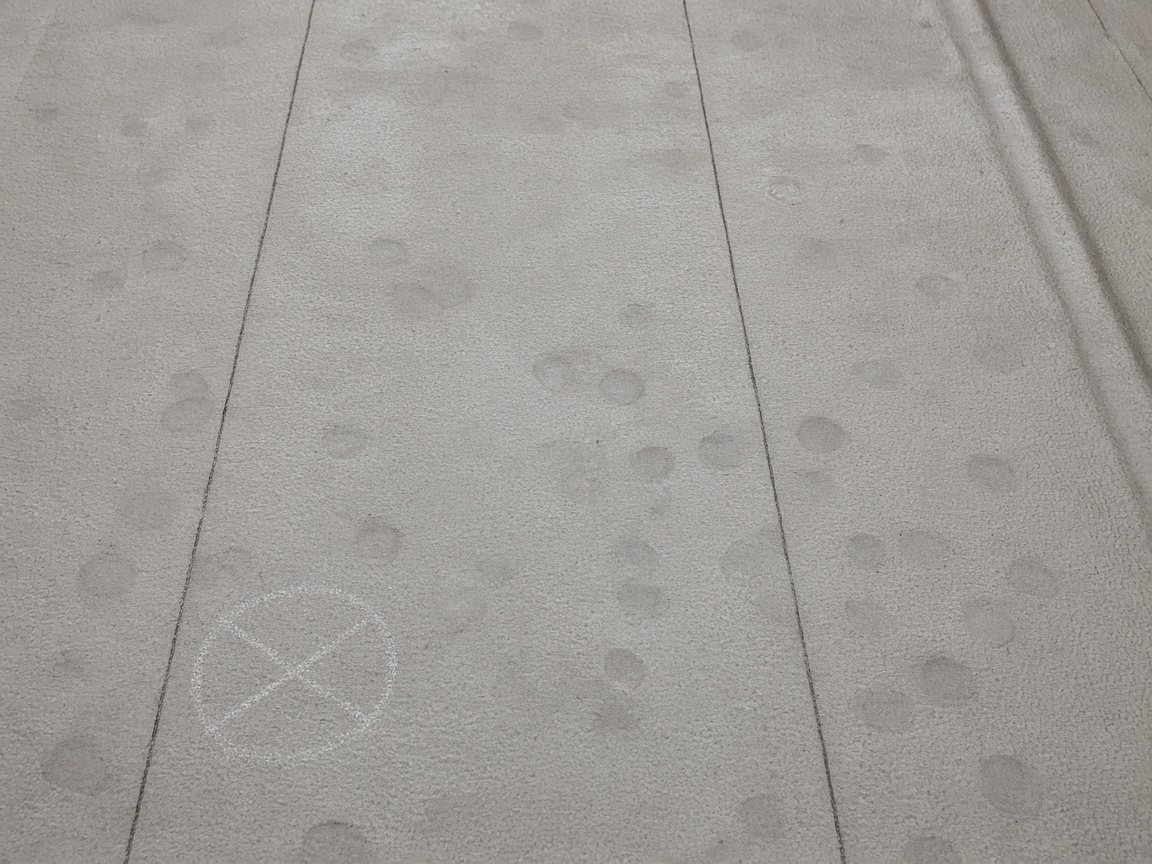
Hail/Large commercial roofs
Hail is a pattern, not a story.
The file has to show where impact landed, where it did not, and which of those marks are storm damage. One photograph of a bruise is not a hail claim.
Impact, chalked on the membrane·Not a client property
What the hail file is for.
Hail on a large commercial roof is an extent problem. A carrier reviewing an office, a store, or a warehouse will ask which area was hit, which assembly took it, and which conditions were already there. NCR’s hail work is that record, then the restoration the record supports.
This is not a residential hail desk. Houses, small rental roofs, and a storm chase that starts from the curb are outside the practice. The path below is for large commercial assets.
What gets written down.
01
The event, labeled as reported
The storm date and what the owner reports about it go in the file as reported facts. They are not rewritten into a certainty the roof has not yet shown.
02
A plan, not a single photograph
Impact is marked where it is seen. A bruise at one test cut does not stand in for the field. Extent is the pattern on the plan.
03
The mark, and the roof away from it
Membrane, panel, fastener, and coating are recorded at the impact and away from it. The comparison is what lets wear, foot traffic, and mechanical damage stay on their own side of the line.
04
Metal, without the assumption
A dent is photographed. Whether that dent is functional damage is a conclusion in the file, written separately. A dent is not treated as a replacement by default.
Those notes enter the same order used on every loss: inspect, document, substantiate, present, restore. The five instruments.
Hail does not set the dollar figure.
Where the file substantiates storm damage, insurance proceeds are often the funds for restoration, including an update when the policy and the building support one. Deductibles, exclusions, maintenance, and betterment can remain with the owner. Nothing is priced from this page.