04/Proof
The standard, not the story.
What can be audited is the file. What will not be found here is a client list dressed up as evidence.
Field, not a case study·Not a client property
Standard instrument
File architecture
The structure of the work product. Not a client file. Not a completed loss.
Cover
Property identification as the owner provides it. No invented policy data.
01Inspect
Roof plan, measured area, assembly notes, and photographs keyed to location.
02Document
A chronology, a labeled photo index, and the conditions under which the roof was observed.
03Substantiate
A damage theory, a marked plan, and an explicit split between storm scope and owner-retained items.
04Present
A carrier presentation: property identification, storm context, evidence, and a scope tied to the evidence.
05Restore
A restoration specification aligned to the loss, and a separate line for any upgrade.
Illustrative structure — not a client matter
How an engagement is organized.
No building, owner, carrier, city, or dollar figure is implied. The absence of a name is the point.
Example 01
Multi-building retail, one hail event
Several roofs, one storm date. The engagement is organized as a single file architecture: a plan for each building, photographs keyed the same way, and one damage theory so extent can be compared. Restoration is scoped per building to what that building’s record supports.
Example 02
Distribution building, one large membrane
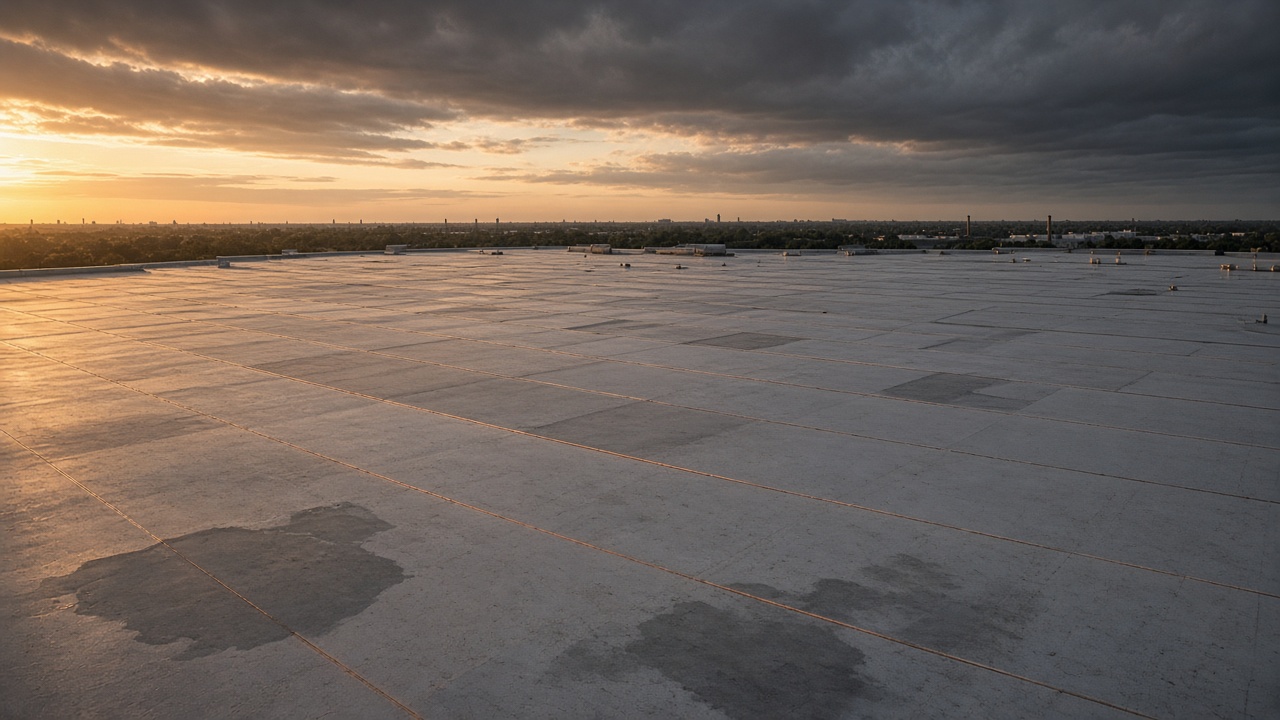
The work is area, seams, and drainage. The file carries a takeoff, observations at the details that move in wind and hail, and a written split between storm effect and ordinary aging. The specification follows that split.
Example 03
Hospitality asset, restoration first
The file establishes what is required to return the roof to pre-storm condition. If the owner wants the system updated in the same mobilization, that scope is itemized on its own. Betterment stays visible. It is not buried in the claim.
Not published.
- Client logos
- Named testimonials
- Claim dollar amounts
- Projects presented as completed NCR work
- Office counts, crew counts, or coverage maps offered as fact
- A live notice that crews are available
- Manufacturer certification badges
- A client login
Proceeds, timing, and scope vary with the policy, the storm, the roof, and the carrier. A single recovery rate would be a slogan. So would a claim that NCR adjusts the loss. The firm is not a public adjuster, and that boundary is written on the evaluation itself.
The proof on offer is procedural: the sequence, the contents of the file, and the line between storm scope and everything else.